Breeders’ Cup · Win and You’re In · 2026 Edition
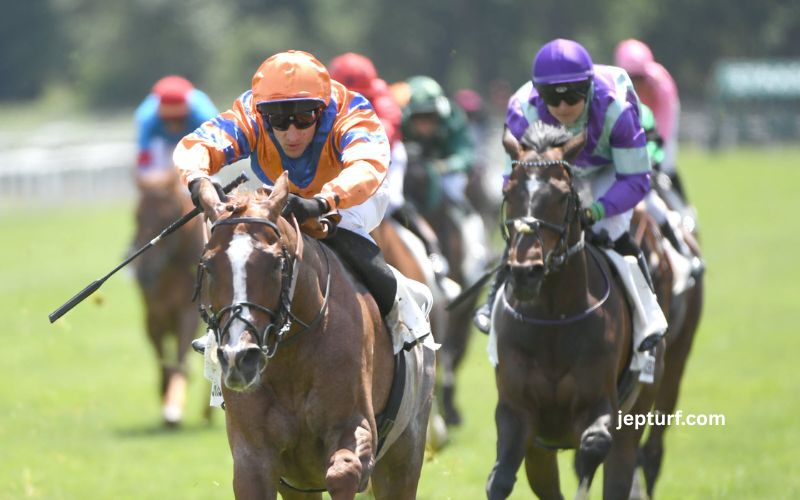
Challenge Turf
The Complete Bettor’s Guide to Breeders’ Cup
“Win and You’re In” Turf Qualifying Races
14 Countries
$6.5M Entry Fees
Oct 30-31 · Keeneland
You’ve seen the horse win. The crowd erupts. Then an announcer says the words that change everything for the connections: “Win and You’re In.”
That phrase is the beating heart of the Challenge Turf system, the global qualification pathway that feeds the world’s best grass runners into the Breeders’ Cup World Championships each autumn.
Most fans know the Breeders’ Cup. Far fewer understand the machinery behind it. This guide breaks the whole system down: how it works, which turf races matter most, what the 2026 schedule looks like, and how to use Challenge Turf results to make smarter bets when October rolls around.
What Is “Challenge Turf”?
“Challenge Turf” refers to the turf-surface races within the Breeders’ Cup Challenge Series “Win and You’re In” program. These are designated stakes races held worldwide where the winner automatically earns a starting berth with entry fees paid in a corresponding Breeders’ Cup Championship turf race. In 2026, the series spans 95 races across 14 countries and 5 continents.
The key word here is automatic. A horse that wins an eligible Challenge Turf race doesn’t go through a selection committee. There is no points system to game. Win the race, earn the spot. It’s the cleanest qualification route in the sport.
The turf divisions covered include the Breeders’ Cup Turf ($5 million), Turf Sprint, Filly and Mare Turf, Juvenile Turf, and Juvenile Fillies Turf. Each has its own set of qualifying races spread across different continents and racing calendars.
How the “Win and You’re In” System Works — Step by Step
The mechanics are straightforward once you see the full picture. Here’s exactly how a horse goes from a qualifying turf race to the Breeders’ Cup gate.
The horse must be nominated to the Breeders’ Cup program as a foal.
Nomination happens early in a horse’s life. Without it, the “Win and You’re In” reward doesn’t apply even if the horse wins the qualifying race. This is a detail most casual fans miss entirely.
The horse wins a designated Challenge Turf race.
The race must be on the official Breeders’ Cup Challenge Series list for that year. Not every stakes race qualifies only those specifically designated by Breeders’ Cup Limited for each division.
Breeders’ Cup pays the entry fees.
This has been the case since 2011. The entry fees for major races can run into tens of thousands of dollars. Breeders’ Cup covers those costs for qualifying winners, a significant financial incentive for international connections.
A travel allowance is issued for out-of-region connections.
In 2026: $10,000 for North American starters outside Kentucky. $40,000 for horses based outside North America entirely. This is what makes it financially viable for a Japanese, French, or Argentine operation to travel to Keeneland.
The horse must be nominated by the pre-entry deadline.
In 2026, that deadline is October 19. Miss it, and the qualification benefits don’t apply. Connections of international qualifiers need to plan this out well in advance of the Championships.
What If the Winner Chooses a Different Breeders’ Cup Race?
This happens more than people expect. A Challenge Turf winner can enter a different division at the Breeders’ Cup from the one they qualified for but they lose the fee-paid benefit for the alternate race. The guaranteed spot applies only to the corresponding division. Some trainers make this gamble when they believe a horse fits a different race better.
Turf vs. Dirt — Why the Surface Changes Everything
You can’t understand Challenge Turf races without understanding what makes a turf horse different. These aren’t just dirt horses running on grass. They are built differently, trained differently, and they race differently.
The Physical Difference
Turf racing demands a different stride pattern. Grass is firmer when dry and more giving when soft and horses respond to each condition differently. True turf specialists tend to have a rounder, more economical stride. They don’t need the same raw power as a dirt horse. What they need is efficiency and balance, especially around turns on European-style courses that differ significantly from American oval tracks.
European vs. American Turf Styles
This is the gap that catches American bettors off guard every Breeders’ Cup. European turf races are often run at a more honest pace from the front. American turf races, especially at shorter distances, tend to be more tactical. A horse that dominated a French Group 1 in a slow early tempo may not reproduce that at Keeneland when the pace is genuine from the gun.
Conversely, American turf horses that win at Saratoga or Keeneland often find European conditions softer ground, longer distances, different track geometry a genuine challenge when they travel the other way.
Why Breeders’ Cup Allocates More Turf Qualifiers Internationally
The majority of the world’s elite turf horses are trained in Europe, Japan, and South America, not the US. The Challenge Series deliberately weights its turf qualifiers toward international racing calendars for this reason. In 2022, Breeders’ Cup restructured the series specifically to improve the geographic spread of turf qualifying races. The result: more global representation at the Breeders’ Cup turf races every year.
2026 Breeders’ Cup Challenge Turf Races — What You Need to Know
The 2026 Breeders’ Cup Challenge Series enters its 20th year with 95 qualifying races across 14 countries. The World Championships take place October 30-31 at Keeneland Race Course in Lexington, Kentucky. A record $6.5 million in free entry fees has been allocated across the full series.
The 2026 series launched in December 2025 when Obataye won the Gran Premio International Carlos Pellegrini in Argentina, earning an automatic berth in the $5 million Breeders’ Cup Turf. That’s how every calendar year starts with the Argentine summer racing season kicking off the global qualification race.
| Turf Division | Breeders’ Cup Race | Purse | Distance |
|---|---|---|---|
| Turf | Longines Breeders’ Cup Turf | $5,000,000 | 1½ miles |
| Turf Sprint | Prevagen Breeders’ Cup Turf Sprint | $1,000,000 | 5½ furlongs |
| Filly & Mare Turf | Maker’s Mark Breeders’ Cup Filly & Mare Turf | $2,000,000 | 1⅜ miles |
| Juvenile Turf | Breeders’ Cup Juvenile Turf | $1,000,000 | 1 mile |
| Juvenile Fillies Turf | Breeders’ Cup Juvenile Fillies Turf | $1,000,000 | 1 mile |
Which Countries Host Challenge Turf Qualifiers in 2026?
| Country | Region | Key Turf Qualifier |
|---|---|---|
| Argentina | South America | Gran Premio International Carlos Pellegrini (G1) |
| France | Europe | Prix de l’Arc de Triomphe (G1) |
| Ireland | Europe | Irish Champion Stakes (G1), Leopardstown |
| England | Europe | Champion Stakes at Ascot (G1) Series finale |
| Japan | Asia | Yasuda Kinen, Takarazuka Kinen |
| South Africa | Africa | Paddock Stakes (G1) Filly & Mare Turf |
| Saudi Arabia | Middle East | Saudi Cup card, King Abdulaziz Racecourse |
| United States | North America | Multiple Saratoga, Belmont, Keeneland, Kentucky Downs |
| + 6 more | Various | Canada, Chile, Peru, South Korea, UAE, Uruguay |
The Most Important Challenge Turf Races to Watch
Not all Challenge Turf races carry the same weight for Breeders’ Cup forecasting. These are the ones serious fans track from summer through October.
Gran Premio International Carlos Pellegrini — Argentina
December · Turf Qualifier · Grade 1
This is how the whole calendar year starts. Held in December in Buenos Aires, it traditionally awards the first Breeders’ Cup Turf berth of the new Challenge Series year. In 2025, Obataye won here to become the first 2026 qualifier. South American turf horses often surprise at the Breeders’ Cup because their racing calendar gives them race fitness at a time when Northern Hemisphere horses are coming off a long season.
Irish Champion Stakes — Leopardstown, Ireland
September · Turf Qualifier · Grade 1
One of the premier lead-up races in Europe. The Irish Champion Stakes at Leopardstown regularly produces Breeders’ Cup Turf contenders and has a long track record of sending winners across the Atlantic. The race draws the best middle-distance turf horses from across Europe, making its winner one of the first names on the Breeders’ Cup Turf shortlist every autumn.
Sword Dancer Stakes — Saratoga, New York
August · Turf Qualifier · Grade 1
The most prestigious North American turf qualifier for the Breeders’ Cup Turf. Saratoga’s turf course is renowned for producing Breeders’ Cup-quality form. A horse that wins the Sword Dancer and then ships to Keeneland is running on familiar American turf conditions. Watch the winner’s margin and how the race was run front-runners here often face a tougher pace test in October.
Coolmore Turf Mile — Keeneland, Kentucky
October · Mile Turf Qualifier · Grade 1
This one runs at the Breeders’ Cup venue itself, just weeks before the Championships. The same turf course. The same track geometry. A horse that wins the Coolmore Turf Mile and returns for the Breeders’ Cup Mile three weeks later has a significant course advantage. The BloodHorse covered this race as one of the most reliable Breeders’ Cup form guides on the entire calendar.
Kentucky Downs Turf Sprint & Turf Cup — Kentucky Downs
September · Turf Sprint + Turf Qualifiers · Grade 2
Kentucky Downs is the most unique turf course in North America a European-style layout with a significant elevation change. Horses that excel here often translate well to Breeders’ Cup turf conditions. Both the Turf Sprint and Turf Cup at this track serve as Challenge qualifiers and generate genuine excitement from the handicapping community every September.
Champion Stakes — Ascot, England
October 17 · Turf Qualifier · Grade 1 · Series Finale
The final race in the 2026 Challenge Series. Run at Ascot just two weeks before the Breeders’ Cup, the Champion Stakes winner arrives at Keeneland with peak race fitness and a Group 1 win under their belt. Historically, Ascot-to-Keeneland turnarounds are aggressive, but trainers increasingly plan for this double with the right horse.
How to Use Challenge Turf Results to Bet the Breeders’ Cup
The Challenge Series was built around television and fan engagement, but for bettors, it’s essentially a six-month form study. Every qualifying race tells you something useful. Here’s how to read them.
1. Track the Winner’s Margin, Not Just the Result
A horse that wins a Challenge Turf race by four lengths going away is a fundamentally different proposition from one who gets up by a nose in a sprint finish. The Breeders’ Cup Turf at Keeneland is 1½ miles. Stamina is tested. Horses that dominate their qualifying race rather than scrape through it have consistently performed better at the Championships.
2. Match the Qualifying Track to Keeneland’s Conditions
Not all turf tracks produce the same form. European horses winning on soft ground in September may face firm Keeneland turf in late October a significant switch. Horses from Saratoga and Keeneland’s own preparatory races are running on the same surface and configuration. Factor in ground conditions when weighing international qualifiers.
3. “Win and You’re In” Horses Have a Track Record
In 2025, 46 Challenge Series winners competed at the Del Mar Breeders’ Cup. Three won their respective races: Forever Young in the Classic, Notable Speech in the Mile, and Ted Noffey in the Juvenile. In 2024, five Challenge winners won at the Championships, including Moira in the Filly and Mare Turf. These aren’t anomalies; the Challenge pathway consistently produces competitive Breeders’ Cup horses.
4. Watch What Happens After the Qualifying Win
Some connections use the qualifying win as a launch pad and give the horse a rest before the Breeders’ Cup. Others keep running. A horse that wins the Irish Champion Stakes in September and then runs in a prep race in October before Keeneland may arrive tired. A horse that wins the Sword Dancer in August, skips a start, and points straight to Keeneland is often fresher. Training patterns matter as much as race form.
Challenge Turf History — From 24 Races to a Global System
| Year | Total Races | Countries | Notable Change |
|---|---|---|---|
| 2007 | 24 | 2 | Series launched. 14 Challenge winners competed at BC. |
| 2008 | 57 | Several | Rapid expansion. 34 Challenge winners at Breeders’ Cup. |
| 2011 | Growing | — | BC begins paying entry fees + travel allowances for winners. |
| 2014 | 71 | 13 | Series at peak pre-restructure scale. |
| 2022 | 82 | 11 | Major restructure: improved geographic spread for turf races. |
| 2025 | 93 | 15 | Record number of races. 46 winners competed at Del Mar BC. |
| 2026 | 95 | 14 | 20th anniversary. Record $6.5M entry fees. Keeneland host. |
The first year of the Challenge Series produced four Breeders’ Cup winners from just 14 Challenge race winners who competed. English Channel won the Breeders’ Cup Turf that day a turf qualifier becoming a Breeders’ Cup turf champion in year one. That precedent set the tone for everything that followed.
2026 Breeders’ Cup World Championships Where Challenge Turf Winners Race
Oct 30-31
2026 Dates
Keeneland
Lexington, Kentucky
$34M+
Total Purses
NBC / FOX
Television Coverage
Keeneland is one of the most respected turf venues in North America. The track’s inner turf course where the Breeders’ Cup Turf is run has a reputation for producing genuine stamina tests. The Coolmore Turf Mile runs on the same course configuration in early October, which is one reason that race carries such predictive value for the Breeders’ Cup Mile.
Television coverage spans seven live programs across NBC, FOX, and Peacock from June through October for the Challenge Series build-up, with the full World Championships broadcast on NBC and Peacock. FanDuel TV carries the majority of individual Challenge Series races leading into the event.
FAQs — Challenge Turf
What is a Challenge Turf race?
A Challenge Turf race is any designated stakes race on the Breeders’ Cup Challenge Series list where the winner earns an automatic starting berth in a corresponding Breeders’ Cup turf race. Entry fees and travel allowances are covered by Breeders’ Cup Limited for eligible winners.
How does a horse qualify for the Breeders’ Cup Turf?
A horse qualifies by winning a designated “Win and You’re In” Challenge race listed for the Breeders’ Cup Turf division. The horse must also have been nominated to the Breeders’ Cup program as a foal. Without that nomination, the qualifying benefits, including paid entry fees, do not apply.
Do Challenge Turf winners always run in the Breeders’ Cup?
No. Connections can decline the berth, scratch due to injury or illness, or enter the horse in a different Breeders’ Cup division. In 2025, 46 out of that year’s Challenge winners chose to compete at Del Mar not every qualifying winner takes up the spot.
What is the difference between the Breeders’ Cup Turf and Turf Sprint?
The Breeders’ Cup Turf is run at 1½ miles a genuine test of stamina for elite middle-distance grass horses. The Turf Sprint is run at 5½ furlongs on grass, targeting short-course specialists who often have European or international backgrounds. They attract very different horse types, with the Turf carrying the bigger $5 million purse.
Which country has the most Challenge Turf qualifying races?
The United States hosts the largest number of Challenge races overall, with 50 North American races scheduled for 2026. However, the most prestigious turf qualifiers are spread internationally, with France, Ireland, England, and Japan producing the strongest European and Asian turf contenders year after year.
Where can I follow the 2026 Challenge Series schedule?
The full official schedule is published at BreedersCup.com/races/challenge-series. For North American race-by-race updates with betting context, AmericasBestRacing.net and USRacing.com both track Challenge winners as the season progresses.
The Challenge Series is a six-month road to Keeneland.
Every turf qualifier from December to October tells part of the story. Follow the key races in Europe, South America, and the US from summer through autumn, and by the time October 30 arrives, you’ll know exactly which horses earned their spot and which ones are primed to deliver.
$5M Breeders’ Cup Turf