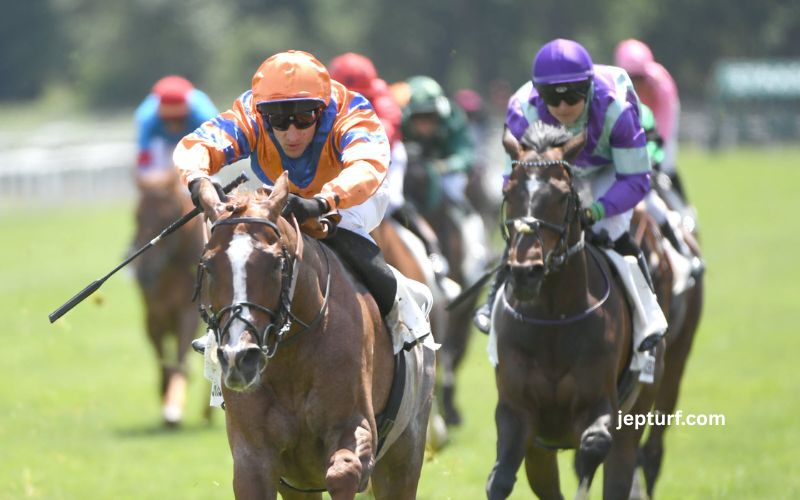
Most bettors lose money on turf races for one simple reason: they handicap them exactly like dirt races. Same speed figures, same pace bias assumptions, same gut feel. Then they wonder why the favorite gets run down in the stretch by a 12-1 shot nobody backed.
Turf racing plays by different rules. The pace shape is different. The running styles that win are different. Even the way you should size your bets is different. If you’re searching “cash turf” because you want to know how to actually put money in your pocket on grass races, you’re in the right place. We’ll walk through exactly what changes on turf, how to read the conditions before you bet a dollar, and a step-by-step checklist you can use at the track or on your phone before post time.
What Does “Cash Turf” Mean in Horse Racing?
“Cash turf” simply means cashing a winning ticket on a race run over a grass course rather than dirt or synthetic. Turf races tend to produce more upsets, bigger payouts, and require different handicapping skills than dirt, since the surface changes pace, stamina demands, and which running styles have the advantage.
Three surfaces exist in modern racing: dirt, synthetic (Tapeta, Polytrack), and turf. Dirt is the most common in North America. Turf is the standard in Europe, most of Asia, and Australia, and it’s used at select North American tracks like Saratoga, Keeneland, Belmont, and Santa Anita for specific meets and stakes. If you bet only dirt, you’re missing the surface where the long shots actually pay.
Why Turf Races Are Different (And Why That’s Your Edge)
Grass is forgiving on a horse’s legs but unforgiving on lazy handicapping. Three things make turf races behave differently from dirt, and each one is a place where sharp bettors find value the public misses.
Pace Dynamics: Slow Early, Fast Late
Dirt races usually go fast early and slow down late. Turf races flip that script: the early pace is often modest, then the field unleashes a sprint in the final furlongs. That means closers and horses with a strong turn of foot get a real chance, even from off the pace, something that rarely happens on a fast dirt track with a clear leader who steals the race.
Bigger Fields, Bigger Payoffs
Turf races regularly draw larger fields than comparable dirt races at the same track. More horses means more live longshots, which means bigger exotic payouts in exactas, trifectas, and multi-race wagers like the Pick 4. A $0.50 trifecta with ten live horses is a completely different opportunity than the same bet in a five-horse dirt sprint.
First-Time Turf Starters: Trap or Opportunity?
A horse switching from dirt to turf for the first time is one of the hardest puzzles in handicapping. Past performances on dirt tell you almost nothing about how that horse will handle grass. Some horses transform completely on turf. Others never adapt. Betting these horses to win outright is a coin flip at best, but using them underneath in exotic combinations, paired with proven turf horses on top, is a smarter way to capture the upside without betting blind.
Reading the Going: Firm, Good, Soft, Heavy
“Going” describes how firm or soft the turf course is, and it directly changes which horses win. Firm turf favors speed and early position. Soft or heavy turf saps stamina fast and rewards horses with strong stamina pedigrees and proven form in similar conditions.
Most racing programs and track websites publish the going before first post. Don’t skip this step. A horse that romped on firm ground last out can run a flat race on soft ground this time, and vice versa. Here’s how to read it at a glance.
| Going | Favored Running Style | What to Look For |
|---|---|---|
| Firm | Speed, early position | Horses with fast early pace figures, sprinters stretching out |
| Good | Balanced, versatile | Consistent recent form across surfaces, no major stamina concerns |
| Soft | Stamina, late closers | Proven soft-ground form, stamina-heavy pedigree, distance experience |
| Heavy | Grinders, mud-pedigree types | History of running well in heavy going, often European-bred stock |
Pedigree and Turf Aptitude: The Overlooked Edge
Most casual bettors never check pedigree. That’s a mistake on turf specifically, because turf aptitude is heritable in a way that’s easy to research and easy for the betting public to ignore.
Sire and Dam Turf Stats
Check the sire’s turf win percentage and the dam’s sire (the broodmare sire), since turf ability often passes through the female line. A first-time turf starter from a sire with a strong turf record is a far better bet than one from a pure dirt sire line, even with identical dirt form.
Quick First-Time Turf Checklist
- Sire or broodmare sire with above-average turf win percentage
- European or South American breeding background
- Workouts specifically scheduled on turf before the race
- Trainer with a strong turf-debut win rate (check trainer stats by surface)
The Cash Turf Pre-Race Checklist
Run through this before you commit a dollar. It takes two minutes once you’re used to it.
- Check the going. Firm, good, soft, or heavy, and how it’s trending through the card.
- Identify the likely pace shape. Count early speed types in the field. A lone speed horse on firm turf is dangerous.
- Flag first-time turf starters. Use pedigree, not dirt form, to judge them.
- Compare class and distance history on turf specifically, not just overall record.
- Check trainer and jockey turf stats, since some trainers are notably stronger on grass.
- Watch the odds board late. Sharp turf money often comes in close to post time.
- Decide your bet type based on field size, not habit.
- Set your stake before you look at the odds, not after.
Best Bet Types for Turf Races: Risk vs Reward
The right bet type on turf depends mostly on field size. Small fields favor straight win or place bets. Larger turf fields, common because of how many horses turf races attract, are better suited to exactas, trifectas, and multi-race wagers where bigger payoffs offset the lower hit rate.
| Bet Type | Risk Level | Payout Potential | Best Use Case |
|---|---|---|---|
| Win / Place / Show | Low | Low to moderate | Small fields, strong single standout |
| Exacta | Moderate | Moderate | Two clear contenders in a mid-size field |
| Trifecta / Superfecta | High | High | Large turf fields with multiple live longshots |
| Pick 3 / Pick 4 | High | Very high | Sequences including one or more turf races with deep fields |
Bankroll and Staking for Turf’s Higher Variance
Flat Betting vs Proportional Staking
Flat betting, the same stake on every race, works fine on dirt where outcomes are more predictable. Turf’s bigger fields and higher variance reward a proportional approach: bet a smaller percentage of your bankroll on turf races with large, uncertain fields, and reserve your bigger stakes for races where you have a genuine edge, such as a horse with proven turf form facing a field of unproven types.
Why Turf Demands a Different Mindset
You will lose more individual turf bets than dirt bets if you’re betting properly, because the format invites more longshot winners. That’s not a sign you’re doing it wrong. It means your wins, when they come, need to be sized to cover the losing stretches. Plan for variance instead of getting rattled by it.
Common Mistakes That Drain Your Bankroll on Turf
- Using dirt speed figures to judge turf form without adjusting for surface
- Ignoring the going report before placing a bet
- Betting first-time turf starters to win based on dirt class alone
- Sticking to win bets in large fields where exotics offer better value
- Chasing losses by increasing stakes instead of sticking to a plan
- Overlooking trainer turf-specific win rates
Trip Handicapping on Turf: What to Watch in Replays
Turf races produce more “trouble” than dirt races because of the wide-open, fast-finishing nature of the stretch run. Watching replays for horses that got caught wide on the turn, blocked in tight quarters, or forced to check stride is one of the most underused edges in handicapping. A horse that finished fourth after losing five lengths to a bad trip can be a live overlay next time out, even though the form sheet just shows “4th.”
Make a habit of watching the last two starts of any turf horse you’re seriously considering, not just reading the past performance line. The numbers don’t always tell you what actually happened in the race.
Frequently Asked Questions
Is turf or dirt easier to handicap?
Dirt is generally easier to handicap because pace and class hold up more consistently. Turf is harder because pace shape, going, and pedigree all shift the outcome, but that difficulty is exactly why turf rewards bettors who do the extra homework.
Do favorites win more on turf or dirt?
Favorites win less often on turf than on dirt, largely due to bigger field sizes and the unpredictable nature of first-time turf starters. This is exactly why exotic wagers tend to pay more on turf, and why backing the favorite blindly is riskier on grass.
What’s the best bet type for a big turf field?
For large turf fields, trifectas, superfectas, or multi-race wagers like the Pick 4 generally offer better value than straight win bets, since they let you capture the bigger payoffs that come from longshots finishing in the mix.
How much should I bet on a turf race?
Size your turf bets as a smaller percentage of your total bankroll than you would on a dirt race with a clearer favorite, and increase your stake only when you have a specific edge, such as proven turf form or a trainer with a strong grass record.
Putting It Together
Turf rewards preparation more than any other surface. Check the going, respect the pace shape, weigh pedigree on first-time starters, and size your bets for the variance that big fields bring. Run through the checklist above before every turf race you bet, and you’ll start seeing the same patterns the sharp money sees.
Horse racing betting involves risk, and no strategy guarantees a profit. Bet only what you can afford to lose, and seek support if gambling stops being fun.