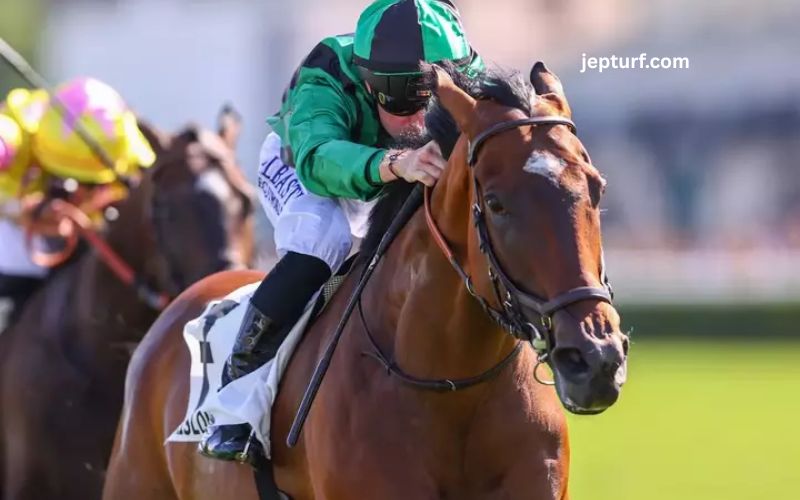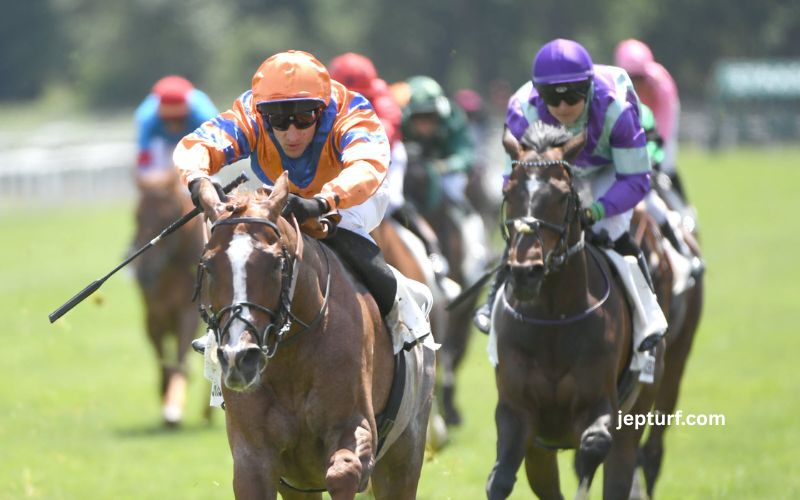
Most bettors lose money on turf races because they carry over dirt-track thinking to the grass. The pace is different. Speed figures lie. And the horse that looked useless on dirt can win by three lengths on turf.
This guide gives you a repeatable, six-point system that experienced handicappers call their confidence turf process so you never approach a grass race blind again.
What Is “Confidence Turf” in Horse Racing?
Confidence turf refers to a structured, evidence-based approach to handicapping and betting on grass races. Instead of guessing, you apply a checklist of proven factors pedigree, going conditions, trainer stats, past turf form to identify horses you can back with genuine conviction, not hope.
The phrase captures a mindset shift. Turf racing rewards the patient, process-driven bettor. If you walk into a grass race with no system, you are essentially flipping a coin with worse odds.
The good news: turf racing is actually more exploitable than dirt racing, precisely because so many bettors get it wrong. Knowing what to look for puts you ahead of the field before the gates even open.
Why Turf Racing Trips Bettors Up (And Why It Shouldn’t)
The Pace Dynamic Is Completely Different
On dirt, fast early fractions often decide the race. On turf, the field tends to bunch together through the early stages, save their energy, then sprint hard in the final furlongs. This “cavalry charge” finish means positional horses and closers have a far bigger advantage than on any dirt surface.
A front-runner who wires fields on dirt may fade badly on grass. Know this, and you immediately read the race differently.
Speed Figures Don’t Tell the Full Story
Beyer Speed Figures and their equivalents are calibrated for dirt. On turf, race times fluctuate wildly based on going conditions, grass length, and drainage quality. A horse that posts a modest turf figure on soft ground may be far better than its number suggests. Lean on class and form, not raw times.
Surface Bias Is Real and Underrated
Some turf courses consistently favor horses drawn on the inside. Others reward wide runners who avoid interference in the stretch. Before you assess any individual horse, check if the course has a documented bias. Ignoring this can cost you a winner who ran a great tactical race but was simply drawn wrong.
Turf vs. Dirt vs. Synthetic: Key Differences at a Glance
| Factor | Turf (Grass) | Dirt | Synthetic |
|---|---|---|---|
| Pace style | Slow early, sprint finish | Early pace often dominates | Similar to turf; closers aided |
| Speed figures | Less reliable | Very reliable | Moderately reliable |
| Pedigree importance | Very high | Moderate | Low to moderate |
| Weather impact | Major (going changes) | Significant (track bias) | Minimal |
| Front-runner advantage | Low (firm turf only) | High | Low to moderate |
| Draw/post position | Critical (inside ground saving) | Moderate | Low |
The 6-Point Confidence Turf Checklist
Run every turf selection through these six filters before you place a single pound or dollar. Miss one, and you’re leaving profit on the table.
1. Proven Turf Win Percentage
Look for a horse that wins 20% or more of its starts on turf. This threshold is the industry standard for a horse that is genuinely suited to grass. Below 10%? Treat that horse as a turf non-stayer unless something specific has changed, such as a step down in class or a going switch that clearly suits.
2. Pedigree Signals
For any horse making its turf debut, pedigree is your primary evidence. Sire lines that consistently produce turf runners include Galileo, Sadler’s Wells, Kingmambo, Danehill, Fastnet Rock, and War Front. If both the sire and damsire have strong turf percentages, that doubles the signal. Always check the sire’s first-time-on-turf percentage, not just the overall turf number.
3. Going / Ground Conditions
Check the horse’s best performances against today’s going description. Firm turf rewards horses with nimble, quick-stepping action and front-runners who can sustain speed. Soft or heavy ground suits powerful, grinding types who put their rivals away in the final climb. A horse that won four times on good-to-firm that is asked to run on heavy is a very different proposition.
4. Trainer Turf Strike Rate
Not all trainers are equal on the grass. Some yards specialize in turf horses and return profits year after year. In North America, trainers like Chad Brown and Wesley Ward are known benchmarks for turf performance. In the UK, the Aidan O’Brien and John Gosden stables have historically excelled on grass. A trainer entering a horse on a surface where they have a below-10% strike rate is a warning sign, regardless of the horse’s ability.
5. Jockey Turf Record at the Specific Track
A jockey’s overall turf stats matter, but their record at this specific course matters more. Turf tracks have unique configurations, sweeping bends, undulating ground, tight rails that require a jockey who knows the layout. A jockey with 5 winners from 12 rides at Ascot’s straight mile is more valuable than a general turf specialist with no history there.
6. Class on the Grass
This is the factor most bettors undervalue. The saying “class on the grass” exists because turf racing rewards horses who compete at high levels consistently, even without flashy speed figures. A Grade 2-winning turf horse dropping into an allowance grass race is dangerous at any price. Class holds on turf far better than on any other surface.
Reading Pedigree for First-Time Turf Starters
A first-time turf starter with a proven turf sire and a turf-successful damsire is a genuine betting opportunity, especially at long odds. Bettors who ignore the horse’s debut because it “has no turf form” miss the fact that pedigree is turf form before the race card fills in the blanks.
Which Sire Lines to Target
In North America, look for offspring of: Kitten’s Joy (the gold standard for American turf), War Front, English Channel, Medaglia d’Oro, and Quality Road. In European racing, Galileo, Frankel, Sea the Stars, and Dubawi consistently produce top grass performers.
These are not guarantees. They are probabilistic edges. A Kitten’s Joy first-time turf starter in a maiden field is more likely to handle the surface than a horse sired by a dirt specialist with no turf offspring to speak of.
The Damsire Signal Most Bettors Ignore
The damsire (the mother’s father) is a secondary but powerful indicator. Brisnet and Racing Post past performance sheets show damsire turf win percentages alongside the sire’s number. When both the sire and damsire have turf win rates above 15%, the horse has a strong genetic predisposition for grass.
Think of a real example: a horse by Data Link (strong turf sire) whose damsire is Dynaformer (legendary turf influence) is practically screaming turf ability from its pedigree page, even before a single grass workout is logged.
The Wet Dirt Clue
Here’s something most handicapping guides skip entirely. If a horse performed significantly better on wet dirt (muddy, sloppy, or good-to-soft tracks) compared to its dirt fast times, that is a strong indicator it will transfer well to turf. The physical action that allows a horse to handle an off-track lower center of gravity, softer footfall, less reliance on hard-surface speed overlaps significantly with turf suitability.
Next time you see a horse switching to turf that ran a career-best on a muddy track, put it much higher on your shortlist. Most of the crowd will overlook it.
Ground Conditions: The Factor That Moves Markets
Going descriptions in the UK and Ireland, and track conditions in the US, are not just administrative notes on the race card. They fundamentally reshape which horses can win. Get this wrong, and your entire race analysis is built on a false foundation.
Going Descriptions and What They Mean for Bettors
| Going (UK/IRE) | US Equivalent | Who Benefits | Avoid |
|---|---|---|---|
| Firm | Hard / Fast | Light, quick-actioned horses; front runners | Big, heavy horses; joint problems |
| Good to Firm | Firm / Good | Most turf horses; ideal all-round | Few negatives |
| Good | Good | Balanced types; strong finishers | Extreme specialist types |
| Good to Soft | Yielding | Closers; strong, powerful horses | Speedy, light-framed front runners |
| Soft | Soft / Yielding | Grinding stayers; off-track types | Small, quick-action horses |
| Heavy | Very Soft / Muddy | Specialist heavy-ground horses; proven mud runners | Any horse without soft/heavy form |
How to Track Going Changes
In the UK, courses publish going updates on race day via the BHA (British Horseracing Authority) going stick measurement. In the US, track superintendents update conditions each morning on official track websites. If significant rain falls in the 24 hours before a race, assume the going has shifted at least one grade softer than listed and re-evaluate your selection accordingly.
Jockey and Trainer Angles on the Turf
How to Find Turf-Specific Trainer Strike Rates
In the UK and Ireland, Racing Post’s Trainer Statistics section breaks down results by surface. In the US, Brisnet and Equibase both offer trainer stats filtered by turf. Set a minimum sample size of 30 starts before trusting any percentage. A trainer with 35% on turf from 5 starts is noise. One with 28% from 120 starts is a genuine edge.
The Jockey-Trainer Combo That Wins More Than You Think
Certain jockey-trainer partnerships work particularly well on turf, and the data is freely available. When Ryan Moore rides for Aidan O’Brien on turf, for instance, you are looking at one of the most profitable combinations in the sport’s history. In the US, Irad Ortiz Jr. paired with Chad Brown on grass is a similar benchmark.
The key insight: when a top yard books a top turf jockey for a horse that looks priced too generously, that booking pattern is itself a confidence signal. The trainer knows the horse’s ability. The jockey accepted the ride. Both are professional signals that a casual bettor can read for free.
What a Jockey Change Tells You
A stable booking a better jockey than the horse has had previously, especially on turf, is a strong positive signal. The yard is telling you the horse is ready. Conversely, a leading jockey being replaced on a well-fancied turf horse without explanation is a flag. It usually means the horse is not as ready as the form suggests.
Betting Strategies for Turf Races
When to Back the Favourite on Turf
Back a turf favourite only when it has a proven going-specific record, a top turf jockey booked, and is dropping in class or has shown progressive turf form. Avoid backing turf favourites who are trying new going conditions or making a significant distance switch on grass for the first time.
Turf favourites do not win at the same rate as dirt favourites. The surface creates more uncertainty, which means value is distributed more widely across the field. Do not back a short-priced turf favourite just because it is the most familiar name in the race.
Each-Way Value in Turf Racing
Turf races in the UK frequently offer each-way terms of 1/4 odds for the first three or four places in fields of 8 or more runners. These conditions suit the bettor looking for value. A horse at 12/1 with a solid 6-point checklist score, running each-way in a 14-runner turf handicap, can return a profit even when it finishes third.
In North America, place pools on turf races are often less efficient than the win pool because casual bettors concentrate on win bets. This means place and show prices can be disproportionately generous on strong turf selections.
Pick 3 and Pick 4 Turf Sequencing
Experienced US bettors construct Pick 3 and Pick 4 tickets that include all-turf sequences for a specific reason: the public tends to massively over-bet the obvious horses, leaving big overlays on grass specialists who do not attract casual money. Use your confidence turf checklist to identify two or three legitimate contenders per race, then build tickets around them rather than picking a single “banker.”
At tracks like Churchill Downs, Saratoga, and Keeneland, turf Pick 4 payoffs can run into four figures precisely because the grass races contain hidden value that the dirt-focused crowd misses.
The Inside-Position Trap
Being drawn on the inside on turf sounds ideal; you save ground through the turns. And it often is. But in turf races where the field bunches and the pace is slow, horses on the inside can get completely boxed in at the turn. They have no room to accelerate when the sprint starts.
The best turf jockeys manage this by tracking a horse in front but staying just wide enough to emerge when the gap appears. If a horse has a jockey known for getting stuck on the inside, check their recent turf race replays; that is a deduction on your confidence score, regardless of the draw.
Common Confidence Killers: Mistakes That Cost Bettors on Turf
- Treating turf form the same as dirt form. A horse that ran 4th on dirt but showed up poorly in the stretch often has an entirely different profile on grass. Never discount a horse’s turf record because its dirt figures are poor.
- Ignoring pedigree on turf debut. No turf form does not mean no evidence. The pedigree page is evidence. Skipping it on a first-time turf starter is leaving a major clue on the floor.
- Backing front runners on soft ground. Soft going kills front-running speed horses. The ones that make all on firm turf simply cannot sustain the effort when the ground pulls at their feet. If the going has changed and you have a front-runner, revise your position.
- Over-relying on speed figures. Class, going preference, and pedigree outweigh Beyer or Timeform numbers on the grass. A horse with a 97 Beyer but zero turf form should not be automatically favoured over a 91 Beyer horse with four turf wins.
- Not checking for turf course removal. In rainy conditions, race organizers sometimes move a scheduled turf race to the main dirt track. A horse whose entire profile was built on grass form is now racing on a completely different surface. Check for late course changes, especially at tracks that frequently take races off the turf.
FAQs: Confidence Turf
What makes a horse a good turf runner?
A good turf runner typically has agility, balance, and a strong finishing kick. Physically, larger hooves help horses stay on top of the turf rather than digging in. Horses that relax during the early stages of a race and accelerate strongly in the stretch are built for the classic cavalry-charge dynamics of grass racing. Pedigree from known turf sire lines strengthens the case further.
How do I read going conditions before a race?
In the UK and Ireland, check the BHA website or Racing Post for official going updates on race morning. In the US, track websites publish conditions from early morning. Pay attention to any forecast rain. Going can shift significantly in the hours before post time, especially on well-drained courses that can go from good to good-to-firm quickly in dry, windy weather.
Should I use speed figures for turf racing?
Use them as a supporting factor, not a primary one. Speed figures on turf are going-sensitive. A figure earned on firm turf is not comparable to one earned on soft. Many professional turf handicappers weight class and form at least 60% and speed figures at 40% when assessing grass races. Never discard them, but never lead with them.
What is “class on the grass”?
“Class on the grass” means that a horse with a high-level turf racing record, even an aging one, typically retains its superiority when it steps back into a lower-grade turf race. Unlike on dirt, where pace and raw speed can overwhelm a classier rival who is slightly past its peak, turf races tend to play out in ways that allow genuine quality to emerge in the stretch run. Backing proven class on turf, at a price, is one of the most reliable long-term betting angles in the sport.
What turf win percentage should I look for?
A turf win rate of 20% or higher indicates a horse that genuinely suits the surface. Horses below 10% from a meaningful number of starts (8 or more) on turf are usually surface non-stayers and should be eliminated unless a specific angle, such as a going switch or class drop, justifies the selection.
Apply Your Confidence Turf System Today
Most bettors walk into a turf race with nothing but a newspaper tip and a gut feeling. You now have a six-point checklist, a pedigree reading framework, a going conditions guide, and a clear picture of where the value actually hides on grass.
Start with the checklist on your next turf card. Run every horse through all six points. Back only the ones that score four or higher, and demand a price that reflects the field’s uncertainty rather than the public’s favourite instinct.
That is confidence turf. Not a hunch. A process.